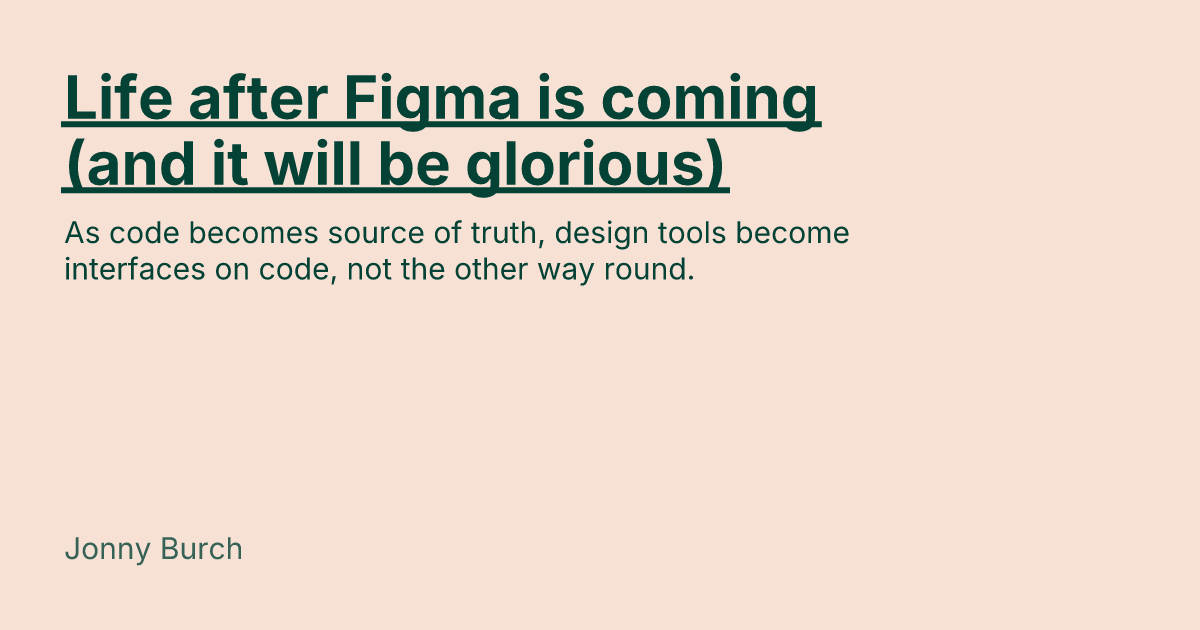
The Paradigm Shift in Design Tools
As the technology landscape evolves, so too does the role of design tools in the software development pipeline. The rise of code as the 'source of truth' has ushered in a new era where design applications are increasingly integrated with coding environments. This shift signifies a departure from traditional design workflows, where tools like Figma reigned supreme, towards a future where design becomes an extension of code rather than its precursor.
Historical Context: Dominance of Software Platforms
Historically, the software market has witnessed the emergence of dominant platforms that capture significant market share. Companies like Salesforce and Workday illustrate how certain tools have not only thrived but defined their respective sectors. As we observe this trend, it becomes evident that the next wave of successful design tools will similarly adapt to the growing need for seamless integration with coding frameworks.
- Integration with Development Environments: The future of design tools lies in their ability to blend with IDEs (Integrated Development Environments) and other coding platforms, making it easier for designers and developers to collaborate.
- Real-time Collaboration: As remote work becomes the norm, tools that enable real-time collaboration across teams will become increasingly valuable, reinforcing the necessity for design tools to adapt.
- Focus on User Experience: The competitive edge will be gained by those platforms that prioritize user experience, ensuring that their tools are not only functional but also intuitive.
Implications for Investors and the Market
For investors, the transition towards code-centric design tools presents both opportunities and challenges. Understanding the market dynamics is crucial for making informed investment decisions. As companies pivot to embrace this new paradigm, those that successfully integrate design with development processes are likely to capture greater market share.
Furthermore, the demand for tools that enhance collaboration and streamline workflows will continue to grow. Investors should keep an eye on emerging companies that demonstrate innovation in these areas, particularly those that leverage artificial intelligence and machine learning to enhance design capabilities.
Key Takeaways
- The evolution of design tools is driven by the need for integration with coding environments.
- Companies that prioritize real-time collaboration and user experience will likely emerge as market leaders.
- Investors should focus on innovative firms that are adapting to these changes, particularly in the realms of AI and enhanced functionality.
In conclusion, the future of design tools is bright, with significant potential for growth as they adapt to the demands of a code-centric world. For investors, understanding these shifts will be vital in navigating the evolving landscape and capitalizing on emerging opportunities.